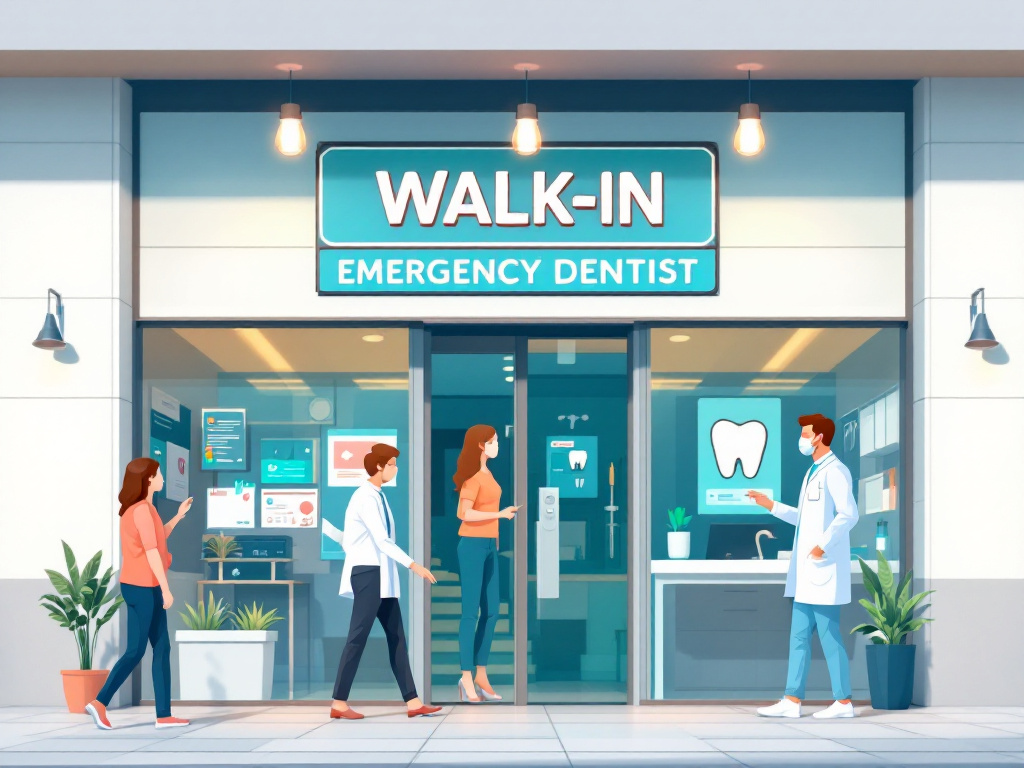
When a tooth breaks, throbs, or gets knocked out, you might not have the time or clarity to call around for appointments. You want a walk-in emergency dentist who can see you quickly and provide same-day care, but it can be hard to know what is actually available and what to expect when you arrive.
This guide explains what a walk-in emergency dentist really offers, how same-day treatment works, what is realistic in a single visit, and how a practice like Cloninger Dentistry fits into your options for dental emergency services.
What a walk-in emergency dentist really does
A walk-in emergency dentist focuses on urgent problems that cannot wait for a routine appointment. You typically do not need to be an existing patient and you may be seen the same day, sometimes within a few hours, depending on the severity of your problem and the office schedule.
Common problems treated on a walk-in or same-day basis include:
- Severe or persistent toothache
- Swelling in your gums, face, or jaw
- Cracked, chipped, or broken teeth
- Knocked-out teeth
- Lost or broken fillings, crowns, bridges, or dentures
- Abscesses or suspected infections
- Trauma to the mouth or jaw that affects your teeth
Emergency-focused offices are designed to triage quickly, take X‑rays as needed, manage your pain, and stabilize the tooth or area. In many cases, you can also begin definitive treatment on the same day through same day dental care.
When you actually need emergency dental care
You do not need to treat every dental issue as an emergency, but some symptoms should never be ignored. In general, you should seek a walk-in emergency dentist or an urgent dental appointment if you notice any of the following:
Red flag symptoms
You should seek urgent care if you experience:
- Tooth pain that is severe, throbbing, or keeps you awake at night
- Swelling in your gums, face, or jaw
- Pus, a bad taste, or foul odor from a tooth or gum area
- Fever or a general feeling of being very unwell with mouth symptoms
- Uncontrolled bleeding after trauma or an extraction
- A tooth that is broken, loose, or completely knocked out
- Sudden sensitivity to hot or cold that does not go away
A dental emergency, as described by Emergency Dental of Las Vegas, includes severe toothache, swelling, uncontrolled bleeding, broken or knocked-out teeth, and loose or missing dental work that requires immediate care. This aligns with what most emergency dentists, including Cloninger Dentistry, consider urgent.
When the ER or urgent care is more appropriate
A dentist is usually the best place for most emergencies such as a broken or knocked-out tooth. In some situations, though, you should go directly to a medical emergency room first:
- Suspected broken jaw or facial bones
- Deep cuts to your lips, cheeks, or tongue that will not stop bleeding
- Difficulty breathing or swallowing
- Facial swelling that is spreading quickly or affecting your eye
The American Dental Association notes that dental visits to ERs nearly doubled from 1.1 million to 2.1 million between 2000 and 2010, yet only a small portion truly require ER care instead of emergency dentistry. ER staff can provide pain relief and antibiotics when a dentist is not available, but they typically do not perform restorations like fillings or crowns, so you still need follow-up with a dentist afterward.
What to expect during a same-day emergency visit
Whether you visit a dedicated emergency dental clinic or a general practice that offers same-day care, the process usually follows a similar pattern.
Check-in and triage
When you arrive as a walk-in emergency patient, staff will quickly assess:
- Your main complaint and how long you have had symptoms
- Your pain level
- Any fever, swelling, or trauma history
- Your medical conditions and medications
Offices such as Aspen Dental, which provide walk-in emergency services nationwide, emphasize quick check-in and prioritizing patients in the most severe pain. At Cloninger Dentistry, your emergency visit is handled with the same focus on prompt relief and clear communication.
Examination and X‑rays
Before any treatment begins, you should expect a focused exam and often radiographs to identify the cause of the problem. Patients visiting Dentcare Now in Fairfax, for example, receive a comprehensive oral evaluation with radiographs before treatment begins. This is standard best practice because it helps your dentist avoid guessing and choose the right solution.
During this stage your dentist will:
- Visually inspect the teeth, gums, and surrounding tissues
- Check for loose teeth or broken restorations
- Gently test your bite and tooth response
- Review X‑rays for decay, fractures, infection, or bone changes
Immediate pain relief and stabilization
Relieving your pain and stabilizing your mouth are the first goals of any walk-in emergency dentist. Depending on the issue, this may include:
- Local anesthetic to numb the area
- Placing a temporary filling or smoothing a sharp edge
- Opening a tooth to relieve pressure from an abscess
- Adjusting or reattaching loose dental work
- Prescribing antibiotics or pain medication when needed
Emergency offices like Aspen Dental focus on providing immediate pain relief, then reviewing next steps and treatment options before you leave, along with a personalized cost estimate. Cloninger Dentistry follows a similar approach, combining urgent dental pain relief clinic services with a clear plan for your follow-up care.
Same-day vs staged treatment
In a single visit, your dentist may be able to fully treat some problems, while other situations require multiple steps or staged care.
- Simple issues such as small cavities, lost fillings, or minor chips can often be resolved completely in one visit through urgent dental repair services.
- More complex problems such as deep decay, large fractures, or abscesses may require an emergency root canal, emergency crown repair, or an urgent extraction dentist visit, with permanent restorations scheduled afterward.
You should leave with a clear understanding of what was done today, what still needs to be completed, and your options for timing and cost.
Common emergency procedures and how they work
When you visit a walk-in emergency dentist, there are several treatments you are most likely to encounter. Understanding each can help you feel more prepared and less anxious.
Toothache and abscess treatment
Severe tooth pain is one of the most common reasons to seek a toothache relief dentist. Often, the cause is:
- Deep decay reaching the nerve
- A cracked tooth
- A gum or tooth abscess
- Advanced gum disease
Emergency Dental of Las Vegas recommends over-the-counter pain relievers like ibuprofen, cold compresses, and avoiding hard or sticky foods while you wait for care, but stresses that urgent professional treatment is still necessary. Your dentist may:
- Drain an abscess or open the tooth to relieve pressure
- Begin an emergency root canal to clean out infected tissue
- Prescribe antibiotics when there is significant infection or swelling
- Provide a temporary filling to close the tooth until a permanent solution is placed
Costs vary widely. In recent US data, a simple filling may range roughly from $139 to $976, while a molar root canal with a crown can average about $2,736. An untreated infection can lead to more complicated and expensive care later, so prompt treatment is essential.
Broken, chipped, or cracked teeth
If you have a fractured tooth from biting something hard or from trauma, a walk-in visit for broken tooth repair urgent or chipped or cracked tooth repair can protect the tooth and reduce your pain.
Depending on the extent of the damage, your dentist may:
- Smooth minor chips and polish the edge
- Place a tooth-colored filling or bonding material
- Prepare the tooth for a crown, with a temporary crown placed the same day
- Recommend a root canal if the crack extends to the nerve
- Advise extraction if the tooth is too damaged to save, followed by an implant or bridge later
For some of the most involved cases, such as a molar root canal plus a porcelain crown or a surgical extraction followed by an implant, costs in 2023–2024 have averaged between about $2,736 and $3,058 in the US. During an emergency visit, you can usually receive stabilization and a detailed estimate for completing your care.
Knocked-out or displaced teeth
A knocked-out tooth is one of the most time-sensitive dental emergencies. You dramatically improve the chance of saving the tooth if you act quickly.
Guidance from Aspen Dental and Emergency Dental of Las Vegas is consistent:
- Pick up the tooth by the crown, never by the root.
- Rinse it gently with water if dirty, but do not scrub.
- Try to reinsert it gently into the socket if you can.
- If that is not possible, keep it moist in milk or a tooth-preserving solution.
- See a dentist immediately, ideally within one hour, to maximize the chance of reimplantation.
At your emergency visit, the dentist will evaluate the tooth and surrounding bone, take X‑rays, and decide whether reimplantation is possible. If the tooth cannot be saved, your options later may include a bridge or dental implant.
Lost crowns, fillings, or broken appliances
Loose or missing dental work can cause sharp edges, sensitivity, and difficulty chewing. Emergency dentists such as Emergency Dental of Las Vegas advise contacting an emergency dentist right away, and avoiding foods that could worsen the damage.
In a same-day visit your dentist may:
- Re-cement a crown or bridge if it still fits properly
- Place a temporary crown or filling to protect the tooth
- Adjust or repair dentures or partials
- Plan a replacement crown or restoration if it is too damaged to reuse
Cloninger Dentistry provides emergency crown repair and other urgent dental repair services focused on restoring your comfort and function quickly.
Extractions and oral surgery
Sometimes the safest and quickest way to relieve pain is to remove a tooth that cannot be saved. If that is the case, your dentist may recommend an emergency tooth extraction.
During an urgent extraction visit you can expect:
- Local numbing of the area
- Gentle tooth removal, sometimes in sections if it is broken
- Instructions for controlling bleeding and swelling at home
- A plan for replacing the tooth in the future, such as an implant or bridge
Some offices, like VCU Dental Care, note that complex surgical extractions or cases needing sedation may require a separate visit or referral to a specialist, especially for medically complex patients. Your dentist will always weigh your safety and overall health when planning urgent extractions.
How “walk-in” and “same-day” really work
Many practices advertise walk-in or same-day emergency services. It helps to understand what these terms typically mean in practice so you know what to expect when you call or arrive.
Walk-in availability
A true walk-in emergency dentist accepts patients without a scheduled appointment, but capacity is not unlimited. In busy offices, you may be seen based on:
- Severity of your condition
- Time of arrival
- Existing schedule and staffing that day
Even offices that accept walk-ins, like Dentcare Now in Fairfax or Emergency Dental of Las Vegas, often encourage you to call ahead if possible so they can prepare and give you a realistic timeframe.
At Cloninger Dentistry, same-day care is prioritized for true emergencies such as:
- Uncontrolled pain
- Significant swelling
- Trauma and broken teeth
- Suspected infection
If you call about a painful tooth emergency care need, you will be guided on whether you can come in immediately, or whether a same-day or next-day urgent dental appointment is more appropriate.
Same-day treatment limits
Same-day care does not mean every step of your treatment is finished in one visit. It does mean that urgent needs are addressed right away. During same-day appointments, your dentist will focus on:
- Getting you out of immediate pain
- Protecting and stabilizing the tooth or area
- Starting essential treatment such as opening an abscess or beginning a root canal
- Planning follow-up visits for permanent restorations
For example, your tooth may be cleaned and an emergency root canal started, with a temporary filling placed. Your permanent crown is then scheduled for a future visit once infection has resolved.
Costs, insurance, and financing for emergency visits
Many people delay calling a walk-in emergency dentist because they are worried about the cost. Understanding how emergency dental fees typically work can help you make informed decisions quickly.
Typical cost ranges
The average cost of an emergency dental visit depends largely on what treatment you need. Recent US data reports:
- Simple fillings ranging from about $139 to $976
- More complex procedures such as a molar root canal with porcelain crown averaging around $2,736
- Surgical extraction followed by an implant averaging about $3,058
Remember that these figures usually do not include associated costs like consultations, additional X‑rays, or prescriptions. Infection-related care, such as treatment for an abscess, may also involve separate fees for drainage, antibiotics, and follow-up visits.
Insurance and payment options
Most general and emergency dental offices accept a wide range of private insurance plans. Dentcare Now, for example, accepts most major insurance providers and offers financing through Alphaeon, LendingClub, and CareCredit, which helps patients access emergency care without waiting.
Aspen Dental offices highlight that:
- The cost of emergency care depends on your treatment, location, and insurance
- Many urgent procedures may be partially covered by dental insurance
- Aspen does not accept Medicaid
- They offer flexible third-party financing and a savings plan that can reduce fees for uninsured patients
At Cloninger Dentistry, your emergency visit includes a transparent estimate before major treatment begins, so you understand your options and can decide on the pace of your care.
Delaying care almost always leads to more extensive, more expensive treatment later. A prompt examination is one of the most cost-effective steps you can take when something feels wrong.
How to manage pain before you get to the dentist
If you cannot get in to see a walk-in emergency dentist immediately, there are safe steps you can take to reduce pain while you wait. These do not replace professional treatment, but they can make you more comfortable.
- Rinse your mouth gently with warm water.
- Use dental floss to remove any food caught between teeth.
- Apply a cold compress outside the cheek to reduce swelling.
- Take over-the-counter pain relievers like acetaminophen or ibuprofen, if you can safely do so.
- Never place aspirin directly on your gums or tooth, because it can burn the tissue.
These home measures are consistent with guidance from urgent dental providers and should always be followed by a prompt professional exam, especially if symptoms persist or worsen.
How Cloninger Dentistry supports your emergency needs
When you are in pain, you need more than clinical skill. You need a team that responds quickly, explains clearly, and stays focused on long-term solutions, not just quick fixes.
At Cloninger Dentistry you can expect:
- Prompt access for emergencies such as severe toothache, broken teeth, or trauma
- Focused diagnostics using X‑rays and thorough exams
- Same-day pain relief and stabilization whenever possible
- A full range of services, including dental trauma care, urgent extraction dentist, emergency root canal, and emergency crown repair
- Clear explanations of your options, timelines, and costs
- Coordination of follow-up visits to complete your care
If you are unsure whether your situation is an emergency, calling for guidance is always the safest choice. The team can help you decide whether you should come in immediately, schedule a rapid urgent dental appointment, or, in rare cases, head straight to the ER.
Taking the next step when something feels wrong
If you are reading this because you are in pain or worried about a recent injury, you do not need to wait and wonder. A walk-in emergency dentist is there to evaluate, relieve your symptoms, and protect your long-term oral health.
Your best next steps are:
- Call a dentist who offers dental emergency services or emergency dental open hours.
- Describe your symptoms as clearly as you can.
- Follow instructions for getting to the office or, if advised, to the nearest ER.
- Plan to begin treatment and schedule follow-up care as recommended.
Emergency dental problems rarely improve on their own. With timely, same-day care and a clear follow-up plan, you have an excellent chance to save teeth, control infection, and return to eating, speaking, and smiling comfortably again.