When your dentist tells you that a routine extraction won’t suffice, opting for complex extraction & implant can transform your smile and oral health. Complex extraction & implant combines expert surgical removal with state-of-the-art implant placement, giving you a durable foundation for a natural-looking tooth. Whether you need a single restoration or a full-arch rehabilitation, this approach addresses the root causes of tooth loss and prevents future bone deterioration.
In this article you’ll learn how complex extractions work, why implants are the gold standard for tooth replacement, and what goes into bone grafting and sedation dentistry. You’ll also discover options like all-on-4, implant-supported dentures, and strategies for a smooth recovery. Armed with this knowledge, you can discuss your case confidently with your oral surgery team or implant specialist.
Understanding complex extraction
Teeth that are impacted, broken below the gumline, or fused to surrounding bone can’t always be removed with simple tools. Complex extractions often require surgical intervention, where your dentist or oral surgery dentist opens gum tissue, carefully sections the tooth, and removes fragments one at a time. This precise approach reduces the risk of bone damage and preserves as much healthy tissue as possible.
When extractions are truly complex
Impacted wisdom teeth represent the most common example of surgical removal. Their roots can curve around nerves or grow sideways, making access difficult. In some cases, your surgeon must remove small amounts of bone or divide the tooth into sections to extract it safely [1]. Similarly, fractured roots and teeth that break under the gumline may require specialized instruments and imaging guidance to prevent accidental damage.
Specialist expertise matters
Oral and maxillofacial surgeons undergo years of advanced training beyond dental school, equipping them with surgical skills and anesthesia knowledge critical for complex cases [2]. Working alongside prosthodontists or periodontists, they coordinate every step from the extraction to the implant phase. This multidisciplinary collaboration allows you to move seamlessly from one procedure to the next, often in the same clinic or surgical center.
Safety and comfort
In a complex extraction setting, your comfort is a top priority. Your team will review your medical history, discuss any medications you take, and recommend sedation or anesthesia tailored to your needs. With options ranging from nitrous oxide to IV sedation you can relax even if you have dental anxiety [3].
Exploring implant placement
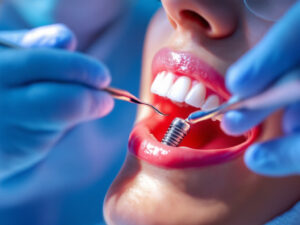
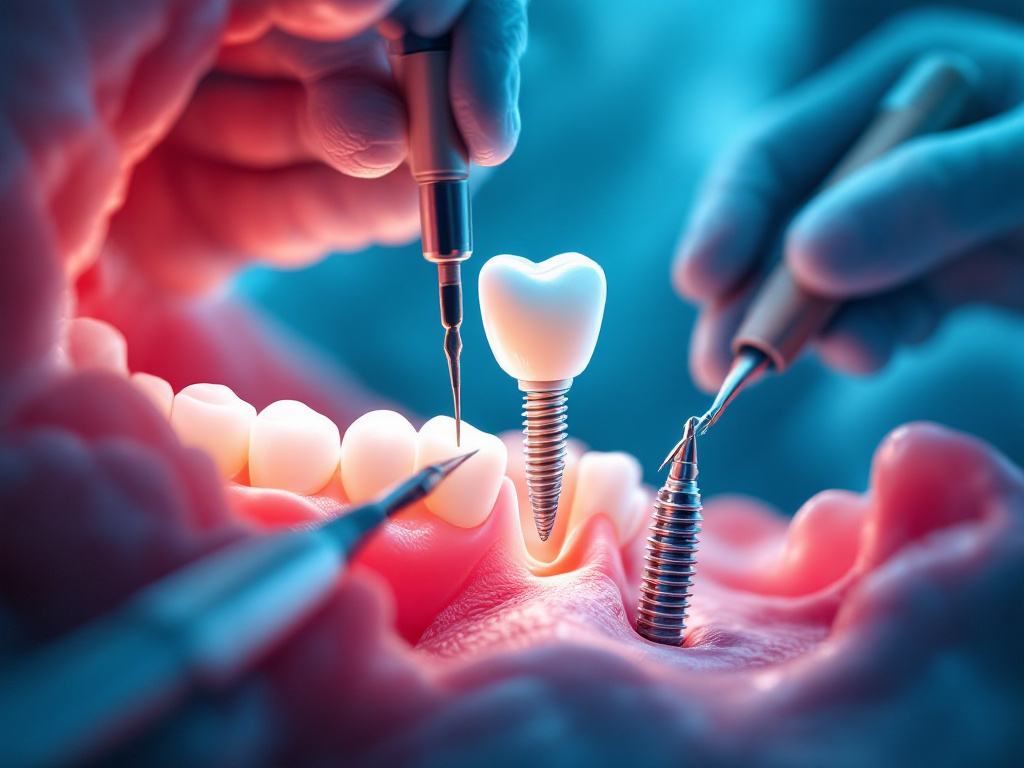
An implant is a medical-grade titanium post that replaces your tooth’s root, anchoring a crown, bridge, or denture just like a natural tooth. Implant placement involves precise drilling into your jawbone, where the post is seated so bone can grow around it in a process called osseointegration. This strong bond gives you bite force and stability that rival natural teeth.
Osseointegration and stability
After your oral surgeon inserts the implant, your body begins to weave bone tissue around the roughened surface of the post. Osseointegration can take anywhere from 2 to 6 months, depending on your bone quality and overall health [4]. During this healing window, you may receive a temporary crown or denture to maintain appearance and function [5].
Implant timeline overview
| Phase | Duration | Description |
|---|---|---|
| Initial healing | 2–6 months | Bone grows around the implant post for firm anchorage [4] |
| Abutment placement | ~2 weeks | Second minor surgery reopens gum tissue to attach the abutment [4] |
| Final restoration | Immediate | A custom crown or prosthesis is affixed for full function and aesthetics [5] |
Choosing the right implant clinic
Every mouth is unique, which is why you want an implant placement cloninger team experienced in complex cases. Whether you’re replacing a single tooth or planning a full mouth reconstruction, a skilled provider ensures accurate placement using 3D imaging and guided surgical guides.
Incorporating bone grafting
In some cases your jawbone lacks the volume or density to support an implant securely. A bone graft procedure augments the ridge, creating a stable foundation for the metal post. This extra step can extend your overall treatment timeline by six to twelve months, but it pays off in long-term success and implant longevity [4].
When you need a graft
If you’ve been missing a tooth for years, your body may have resorbed bone in that area, leaving insufficient height or width for an implant. Gum disease and chronic infections can also erode bone. In these scenarios your surgeon recommends a bone graft dental surgery to rebuild the site before implanting.
Graft materials and techniques
Your care team selects from several graft sources based on your needs. Autografts come from your own body, often harvested from the chin or hip. Allografts use donor bone from a tissue bank, which cuts surgical time. Xenografts, derived from animals, provide a scaffold that remodels into new bone. Synthetic options rely on biocompatible minerals like hydroxyapatite to support regrowth.
Each material integrates at its own pace, and your surgeon monitors healing before moving forward with implant placement. When grafting and implant restoration happen together, you may qualify for bone graft & implant restoration in a single appointment.
Choosing sedation dentistry
The thought of oral surgery can be intimidating, but sedation dentistry ensures you stay calm and comfortable. From mild relaxation to deeper sedation, your options let you control anxiety without losing important reflexes.
Sedation options include:
- Minimal sedation (nitrous oxide), which scents like sweet air and wears off quickly
- Moderate sedation (oral sedatives), taken before your appointment to induce drowsiness
- Deep sedation (IV sedation), administered by an anesthesiologist for a twilight state
- General anesthesia, used for extensive procedures or if you have severe dental fear
With sedation dentistry services and sedated tooth extraction, you might not even remember parts of the procedure. This approach is especially valuable when your treatment plan includes multiple extractions, grafts, or implant placements in one visit. You can also work with an implant dentist with sedation to ensure seamless care from start to finish.
Planning full-mouth reconstruction
If you need several teeth replaced or an entire arch restored, full-mouth reconstruction with implants can transform your function and confidence. Modern protocols like the all-on-4 implant procedure dramatically reduce treatment time by using four strategically placed implants to support a whole-arch bridge.
All-on-4 vs implant dentures
Traditional dentures rest on your gums and can slip or require frequent relining. Implant-supported dentures attach to multiple posts, stopping bone loss and giving you a stable fit [4]. You might hear this option called “hybrid dentures” or “fixed full-arch prosthesis” at an implant and restoration clinic.
Single-tooth and partial-arch restorations
You don’t have to commit to a full arch if you’re only missing a few teeth. Your implant prosthetics dentist can design custom bridges that span gaps of two or three teeth, often combining them with crowns on adjacent natural teeth. For single missing teeth, custom crowns blend almost seamlessly with your remaining dentition via an implant restoration services provider.
Ceramic implant alternatives
If you have a known sensitivity to titanium or simply prefer a metal-free option, ceramic implants provide an alternative. While they are less common, they mimic the color of your natural root and integrate similarly over several months [6].
Managing recovery and aftercare
A thoughtful aftercare routine is just as important as the surgery itself. Following your surgeon’s instructions helps you avoid complications like dry socket and ensures your implant sites heal optimally.
Post-op instructions
After surgery you’ll receive detailed guidelines on swelling control, bleeding management, and oral hygiene. You should:
- Apply ice packs intermittently during the first 24 hours
- Eat soft foods and avoid hot beverages for at least 48 hours
- Rinse gently with salt water after meals to clear debris
- Avoid smoking, spitting, or using straws to prevent disrupting your clots [7]
Follow-up schedule
Your healing timeline can vary, but typically:
- One-week check for suture removal and swelling assessment
- One-month evaluation of bone graft or implant initial integration
- Final implant review at 3–6 months before crown or prosthesis placement
Ongoing maintenance
Once your crown or denture is in place, routine dental visits every six months keep your implants healthy. Your dental implants dentist will examine the restoration’s fit, check for gum health, and polish around the implant surfaces to remove plaque. With proper oral hygiene and professional care, implants can last decades.
Care beyond surgery
If you notice unexpected pain, persistent bleeding, or signs of infection like fever, contact your surgeon immediately. Early intervention often prevents the need for implant removal and retreatment, saving you time and stress.
Choosing the right team
Selecting an implant surgery clinic or implant specialist clinic with a proven track record in complex cases ensures you receive comprehensive care. From your initial consultation through your final restoration, a cohesive team guided by evidence-based protocols offers the highest success rates.
Advances in technology, sedation, and biomaterials have made complex extraction & implant a smart choice when routine procedures fall short. By addressing both the extraction and the restoration in a coordinated plan, you reduce overall treatment time, preserve bone structure, and achieve a predictable outcome. Armed with this information, you can approach your dental journey with confidence, knowing you’ve chosen a solution built to last.
References
- (Temecula Facial Oral Surgery)
- (Lincoln Dental Associates)
- (sedation dentistry services)
- (Trailhead Advanced Dentistry)
- (Mayo Clinic)
- (Cleveland Clinic)
- (Congressional Dental)