
Understanding implant specialist clinics
When you face the prospect of dental implants or complex oral surgery, the expertise of an implant specialist clinic can ease your concerns and improve your long-term outcome. Implant specialists undergo rigorous, hospital-based residency training beyond dental school, gaining advanced surgical skills that you simply won’t find in a general practice. Their focused education equips them to handle delicate procedures—such as bone grafting, sinus augmentation, and complex extractions—while minimizing risks like nerve damage or implant failure.
You’ll also benefit from a team approach at a dedicated implant surgery clinic, where restorative dentists, periodontists, oral surgeons, and sedation experts collaborate on every case. This integrated model ensures you won’t have to coordinate multiple providers on your own—your implant specialist clinic often offers both the surgical placement and the crown restoration under one roof, streamlining your journey to a healthy smile.
“Almost one in five dental implant procedures performed by general dentists fail, whereas implant specialists achieve a success rate of 95 percent or above over 30 years” [1]
By choosing a clinic with board-certified periodontists and oral surgeons, you tap into decades of focused experience. These specialists adhere to strict protocols mandated by the American Dental Association for sedation and surgical care, providing both comfort and safety—critical factors when you’re anxious about dental work.
Minimizing surgical risks
Ensuring precision and reducing complications begins well before the first incision. Implant specialist clinics use state-of-the-art diagnostics to map your anatomy and plan every step of treatment. This attention to detail not only protects vital structures, such as nerves and sinuses, but also sets the foundation for durable, long-lasting implants.
Implant placement precision
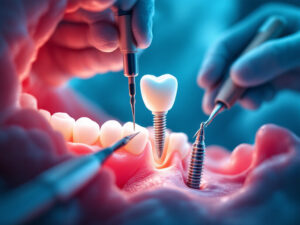
Before placing an implant post, your specialist will employ 3D digital scanning and cone-beam computed tomography to assess jawbone density and volume in three dimensions. With this precise data, they can plan the exact angulation, depth, and position of each implant. Guided surgical stents—fabricated from the digital plan—ensure the implant is inserted at the perfect trajectory, reducing trauma and enhancing osseointegration.
Such meticulous implant placement is what differentiates a dental implants dentist from a provider who relies on two-dimensional X-rays. When you choose an implant placement cloninger expert, you’re leveraging advanced tools that translate into higher initial stability and fewer postoperative complications.
Bone graft procedures
In cases where your jawbone lacks sufficient height or width, your specialist can augment it with bone grafts sourced from synthetic materials, cadaver bone, or your own body. This preparatory step fortifies the foundation for implants, preventing early failure due to inadequate support. Whether you require a minor graft to fill a socket after a wisdom tooth extraction or a larger block graft for multiple implants, your clinic will tailor the procedure to your unique anatomy.
A combined approach—where bone grafting and implant placement occur in the same visit—can reduce your overall treatment time, but only if your bone quality and systemic health allow it. Your specialist assesses these factors meticulously, referring you to bone graft dental surgery or bone graft & implant restoration protocols that optimize healing and implant integration.
Managing dental anxiety
Fear of pain and loss of control often deters patients from pursuing necessary oral surgery. A trusted implant specialist clinic addresses this head-on by offering a spectrum of sedation dentistry services designed for anxious patients.
Sedation dentistry options
Your comfort is paramount during any surgical visit. Implant specialists typically provide multiple levels of sedation—from minimal anxiolysis to full IV sedation—under licensed supervision. Below is an overview of common sedation techniques:
| Sedation level | Administration method | Ideal for |
|---|---|---|
| Nitrous oxide | Inhaled through a mask | Mild anxiety, short procedures |
| Oral sedation | Oral tablet before procedure | Moderate anxiety, longer visits |
| IV sedation | Intravenous drip | Severe anxiety, complex surgery |
| General anesthesia | IV plus inhaled agents | Extensive reconstruction cases |
These options—offered through your sedation dentistry services or sedation dentistry for anxious patients program—help you remain calm, comfortable, and unaware of the procedure. Your implant dentist with sedation team monitors your vital signs continuously, ensuring both safety and peace of mind.
Sedated extractions
Even routine surgical extractions can trigger significant stress. Whether you need a straightforward wisdom tooth removal or a complex surgical extraction for impacted teeth, sedation allows you to relax completely. Clinics that specialize in sedated tooth extraction combine local anesthesia with your chosen sedation level, minimizing discomfort and reducing intraoperative awareness.
By entrusting your care to a sedation-certified implant specialist, you avoid the unpredictable anxiety spikes common in dental chairs. Instead, you wake up pain-free and with little memory of the process—transforming what once felt daunting into a smooth, controlled experience.
Comprehensive surgical services
Beyond implants and grafts, a true specialist clinic excels in surgical dentistry across a spectrum of procedures. You gain access to providers skilled in advanced techniques and backed by hospital-grade protocols.
Wisdom tooth extraction
Impacted wisdom teeth can lead to pain, infection, and damage to adjacent teeth. Your specialist evaluates nerve proximity with 3D imaging before performing extraction. By using microsurgical tools and precise techniques, they protect the inferior alveolar nerve and maximize postoperative comfort. If you’ve hesitated on a wisdom tooth extraction out of fear, sedation dentistry and a specialist’s steady hand can redefine the experience.
Complex extractions and implants
When conventional extractions risk fracturing roots or compromising bone, specialists employ Sectioning and piezoelectric devices to remove teeth gently. In the same visit, you may receive an implant—transforming a potentially traumatic extraction into a streamlined complex extraction & implant workflow. This integrated approach reduces healing time, cuts costs, and spares you additional procedures.
The breadth of surgical dental services at a specialist clinic also includes treatment of dental trauma, cyst removal, and corrective jaw surgery. You’ll work closely with an oral surgery dentist who coordinates follow-ups, ensuring your surgical site heals optimally and is ready for any restorative phase.
Restorative and reconstruction solutions
Once your implants and grafts are secure, restoring function and aesthetics becomes the focus. Implant specialist clinics provide a variety of prosthetic and reconstructive options tailored to your goals.
Full mouth reconstruction
If you suffer from extensive tooth loss, severe wear, or failing restorative work, a full mouth reconstruction may be the answer. Your specialist designs a comprehensive plan that often integrates all-on-4 implant procedure techniques, strategic implant placement, and immediate-load protocols. This strategy can restore an entire arch of teeth in fewer visits, bringing back chewing function, facial support, and confidence.
Custom-fabricated prostheses—designed in collaboration with dental laboratory experts—ensure a natural look and precise fit. Whether you need a single arch or both arches reconstructed, your clinic’s full mouth reconstruction pathway streamlines every phase, from planning through final delivery.
Implant supported prosthetics
For less extensive cases, you may choose tailored prosthetic solutions, including implant crowns, bridges, and implant supported dentures. Working with an implant prosthetics dentist, you’ll explore options such as screw-retained crowns, cement-retained bridges, and bar-retained overdentures. Each design balances ease of maintenance, esthetics, and long-term stability.
If restoration challenges arise—such as wear on occlusal surfaces or minor bone changes—your clinic’s implant restoration services team provides adjustments, repairs, and even full prosthesis replacement. The end result is a durable smile solution backed by the same experts who placed your implants.
Choosing your specialist clinic
Selecting the right implant specialist clinic involves more than scanning for the nearest provider. You want credentials, technology, and a patient-centered approach. Ask these key questions when vetting clinics:
- Does the team include board-certified periodontists or oral surgeons?
- What imaging and guided surgery technologies do they use?
- Which sedation levels are offered, and who administers them?
- Do they provide both surgical placement and final restoration on-site?
By focusing on these factors, you avoid surprises and ensure your care is truly comprehensive. Personalized treatment planning, transparent cost estimates, and clear communication pave the way for a stress-free dental journey.
Ensuring long-term success
Your relationship with an implant specialist clinic doesn’t end when the crown placement is complete. Routine follow-ups, professional cleanings, and periodic imaging are essential to monitor bone levels and implant stability. Many clinics offer maintenance plans that include six-month check-ups and digital scans, catching potential issues before they escalate.
Developing good oral hygiene habits at home—such as interdental cleaning around implant abutments—complements your specialist’s efforts. With consistent care, your implants can last decades, often longer than traditional bridges or dentures.
Choosing a trusted implant specialist clinic means you gain a partner committed to your comfort and confidence, from the initial consultation through a lifetime of healthy smiles.